
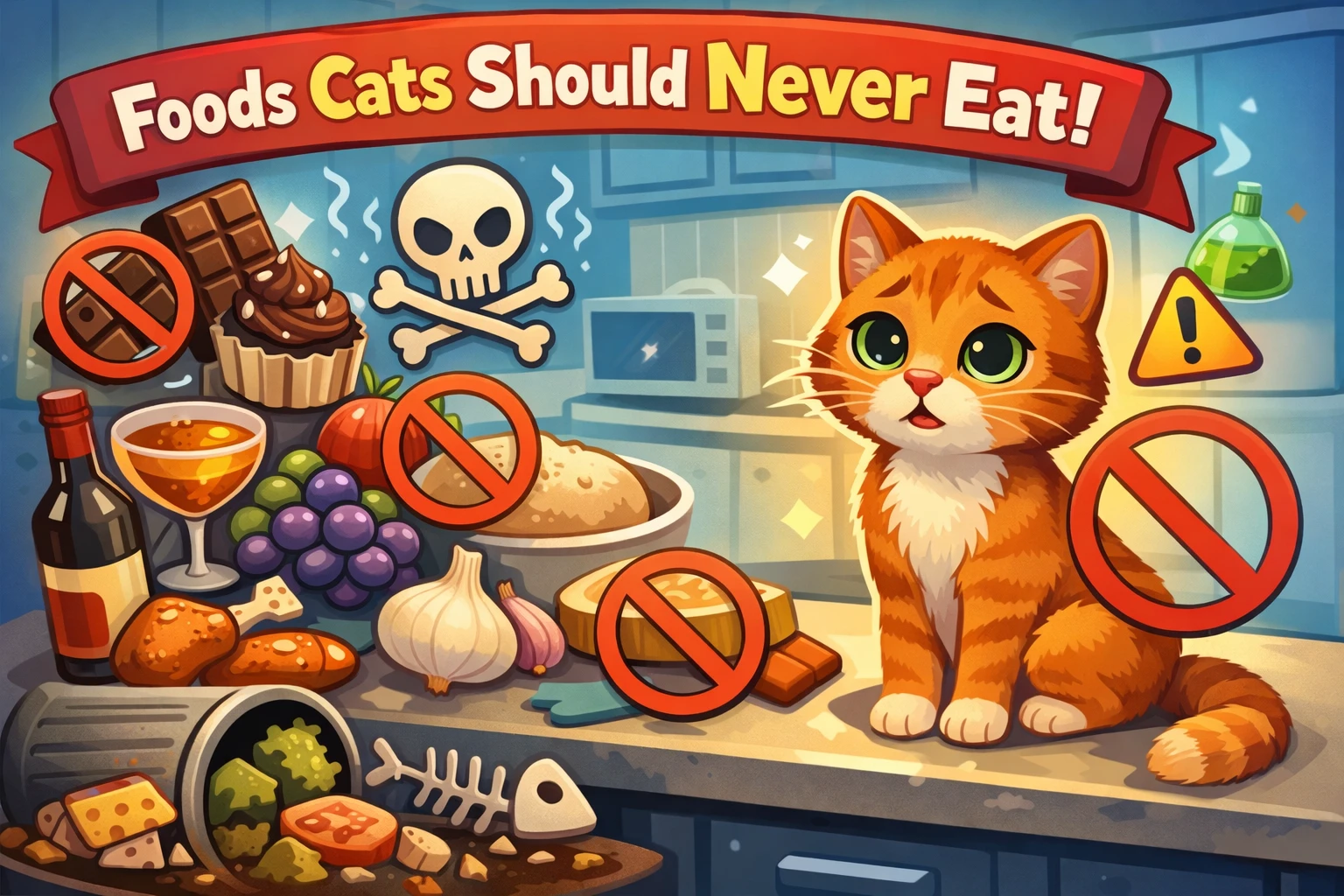
Cats are curious little food detectives. One minute they act uninterested. The next minute they are right next to your plate, sniffing like they paid for the meal.
That is why it helps to know which foods cats should never eat, even in small bites. Some can cause a mild stomach upset. Others can turn into an emergency quickly.
If you want more easy, practical safety checklists, take a look at our Pet Safety Guides. You can keep a few favorites saved for fast access.
And if you want the longer version of this topic with extra detail, here it is: Foods Cats Should Never Eat.
Foods cats should never eat (quick list)
Keep these out of reach, off the counter edge, and away from “just one lick” moments:
Onions, garlic, chives, leeks, shallots
Chocolate and cocoa powder
Coffee, tea, energy drinks, caffeine pills
Alcohol and foods made with alcohol
Grapes and raisins
Raw bread dough with yeast
Xylitol (sugar-free sweetener)
Raw meat and raw eggs
Bones (cooked or raw)
Very salty snacks and processed meats
Fat trimmings, greasy leftovers, fried foods
Nuts (high fat, stomach upset risk)
Milk, ice cream, and cream sauces
Citrus peels and citrus oils
Avocado
Moldy or spoiled food from the trash
Now let’s break them down in a simple way.
1) Onions, garlic, and the whole allium family
These are some of the biggest troublemakers for cats.
Avoid:
Onion (raw, cooked, dried, powdered)
Garlic (raw, cooked, dried, powdered)
Chives, leeks, shallots
These can damage red blood cells and lead to anemia. The scary part is that the risk can build up over time if a cat gets small amounts often.
Hidden sources: seasoning blends, soups, broths, deli meats, sauces, and leftovers.
2) Chocolate and cocoa products
Chocolate is a classic “no” food for pets, and cats are not an exception.
Avoid:
Dark chocolate
Baking chocolate
Cocoa powder
Milk chocolate
Chocolate frosting and desserts
Chocolate contains stimulants that can stress the heart and nervous system. Dark chocolate and baking chocolate tend to be the most risky.
3) Coffee, tea, and anything with caffeine
Cats do not need caffeine, and their bodies do not handle it well.
Avoid:
Coffee grounds and brewed coffee
Tea bags and brewed tea
Cola and energy drinks
Caffeine pills or powdered supplements
Caffeine can cause vomiting, restlessness, tremors, and a dangerously fast heartbeat.
4) Alcohol (even tiny amounts)
Alcohol is unsafe for cats, full stop.
Avoid:
Beer, wine, liquor
Desserts made with alcohol
Foods soaked in alcohol
Fermented leftovers
Alcohol can lead to vomiting, poor coordination, breathing problems, and worse. If a cat gets into alcohol, call a vet right away.
5) Grapes and raisins
A lot of people do not expect grapes to be a problem. They can be.
Avoid:
Grapes
Raisins
Trail mix with raisins
Raisin cookies and breads
Grapes and raisins have a known link to kidney problems in pets. The reaction can vary, so it is not worth testing your luck.
6) Raw bread dough with yeast
Raw dough is dangerous in a very sneaky way.
Avoid:
Unbaked pizza dough
Bread dough left to rise
Dough scraps on the counter
Yeast dough can expand in the stomach and create painful gas and pressure. It can turn into a serious emergency.
7) Xylitol (sugar-free sweetener)
Xylitol shows up in a lot more products than people expect.
Watch for it in:
Sugar-free gum
Sugar-free candy
“No sugar added” baked goods
Some peanut butters
Toothpaste and mouthwash
Even if your cat does not chew gum, cats love to lick crumbs and wrappers. Keep xylitol products locked away.
8) Raw meat
Raw meat can carry bacteria that makes cats sick, and it can spread around your home too.
Avoid:
Raw chicken, turkey, beef
Raw meat juices on plates or counters
Raw scraps left out
It is safer to stick to properly cooked, plain proteins that are made for pets.
9) Raw eggs
Raw eggs come with two problems. Bacteria risk, and possible long-term nutrition issues if it becomes a habit.
Avoid:
Raw egg whites
Raw whole eggs in “treats”
Licking bowls from raw baking mixes
A small lick will not always cause a disaster, but it is still a risk you can avoid.
10) Bones (cooked or raw)
Bones look like a natural treat, but they can cause real damage.
Avoid:
Cooked chicken bones
Rib bones
Fish bones
Bone scraps from leftovers
Bones can splinter, crack teeth, or cause choking. They can block the intestines too, and that can mean surgery.
11) Very salty foods and processed meats
Cats do not need salty snacks, and salty foods can hit them hard.
Avoid:
Chips, crackers, salty snacks
Processed meats like salami or ham
Salty soups and broths
Seasoned jerky
Too much salt can lead to vomiting, weakness, and dehydration. Processed meats add spices and preservatives on top of the salt, so they are a double problem.
12) Fat trimmings, greasy leftovers, and fried foods
A cat begging for greasy meat is normal. Giving it is not.
Avoid:
Bacon grease
Sausage fat
Fried chicken skin
Heavy gravy and oily leftovers
Greasy foods can trigger vomiting and diarrhea. Some cats get pancreatitis, and that is painful and serious.
13) Nuts
Most nuts are not “toxic” in the way chocolate is, but they still cause trouble.
Be careful with:
Walnuts, pecans, almonds
Mixed nuts
Nut-heavy baked goods
Nuts are high in fat. That often means stomach upset, and cats do not need that extra load.
14) Milk and dairy products
This one surprises people. Many cats love dairy. Many cats feel awful after it.
Avoid or keep very limited:
Milk
Ice cream
Cream sauces
Soft cheeses
A lot of cats cannot digest lactose well. The common result is diarrhea and gas, and nobody enjoys that.
15) Citrus peels and citrus oils
Cats usually dislike citrus scents, and that is a good instinct.
Avoid:
Citrus peels
Citrus essential oils
Strong citrus cleaners near food bowls
Citrus oils can irritate the stomach and mouth. Essential oils can be a bigger risk since they are so concentrated.
16) Avocado
Avocado is not a top poison risk for cats, but it still is not a good snack.
Problems include:
Upset stomach
High fat content
Choking hazard from the pit
If your cat licks a tiny bit, it often ends up as a stomach issue. A bigger bite can cause more trouble.
17) Moldy or spoiled food (trash can danger)
This one gets missed a lot. Cats are sneaky, and trash smells “interesting” to them.
Avoid:
Moldy bread
Spoiled leftovers
Trash meat packaging
Rotting food scraps
Mold and spoiled foods can contain toxins that cause vomiting, tremors, and weakness. If your cat loves the trash, a lidded bin helps a lot.
Signs your cat ate something unsafe
Watch for:
Vomiting
Diarrhea
Drooling
Wobbling or weakness
Fast breathing
Tremors
Seizures
Pale gums
Hiding and acting “off”
Some reactions show up fast. Some take longer. If your gut says something is wrong, trust it and call a vet.
What to do right away
Here’s a simple plan that works in most cases:
Remove the food and move it out of reach.
Check your cat’s mouth for stuck pieces.
Save the packaging or label.
Call your vet or an emergency clinic.
Write down what your cat ate and the rough amount.
Do not give home treatments unless a vet tells you to. Some fixes can make things worse.
Easy prevention tips that actually stick
Put leftovers in sealed containers right after meals
Wipe counters and tables after cooking
Keep chocolate, grapes, gum, and dough out of reach
Use a trash can with a lid
Tell guests not to “share a bite” with the cat
Keep treats cat-safe and simple
Small habits stop most accidents.
Extra note for homes with dogs too
Some “safe for dogs” snacks do not work for cats. Cats are smaller, and they react differently.
If you are settling in a new dog at the same time, this guide helps you build calm routines fast: 3-3-3 Method for Dogs.

Salut. Numele meu este Daniliuc Marcel Catalin. Mă consider o persoană melancolică iar, de cele mai multe ori, starea mea de spirit este influențată de poveștile auzite, cărțile citite, filmele văzute etc.