A shared suitcase can contain two phones, a camera, an e-reader and several nearly identical cables. Yet the first evening of a holiday can still end with one person searching for a charger while the other discovers that the plug does not fit. The answer is not necessarily a bigger bag of accessories. It is a short planning conversation before packing.
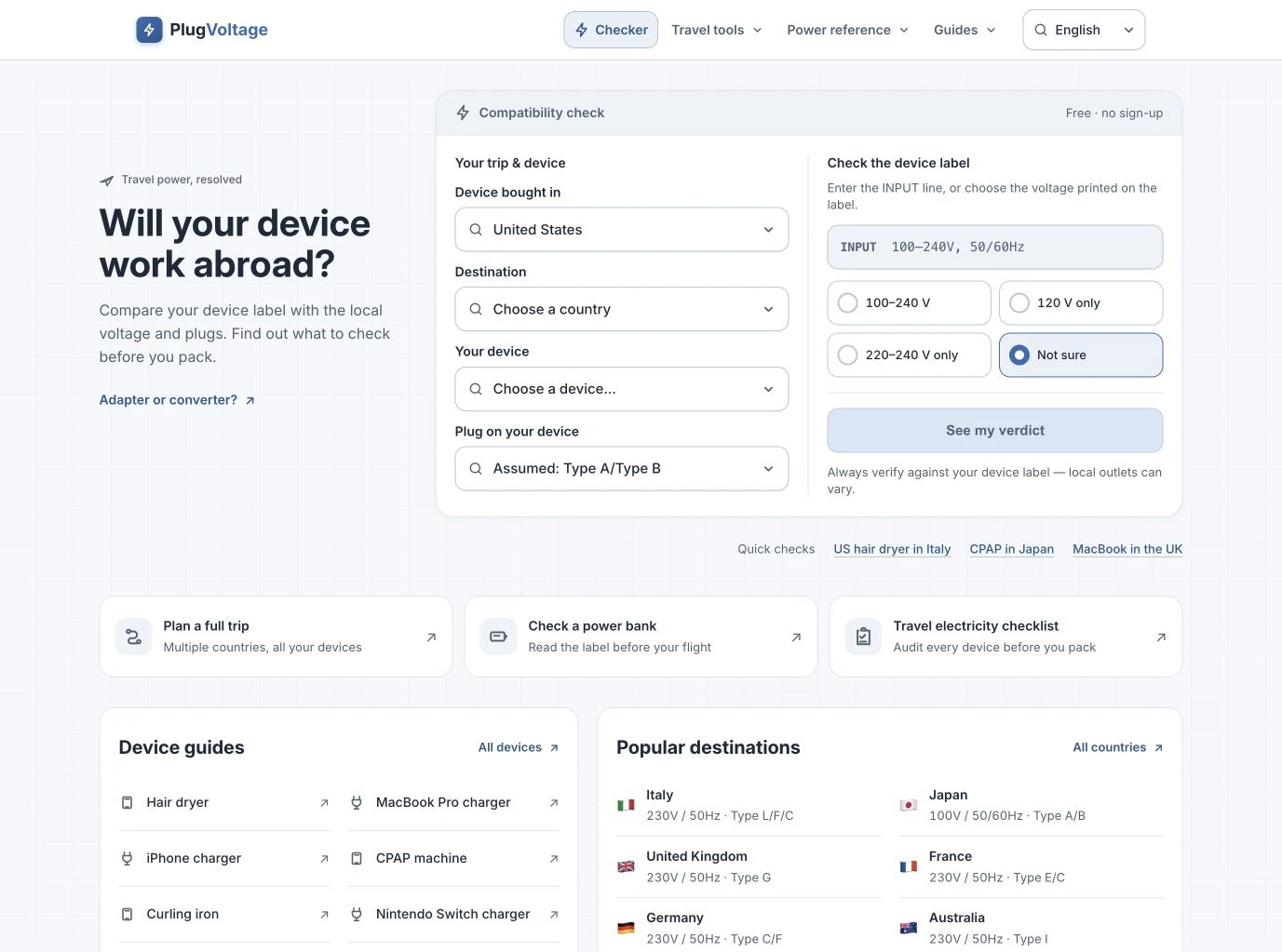
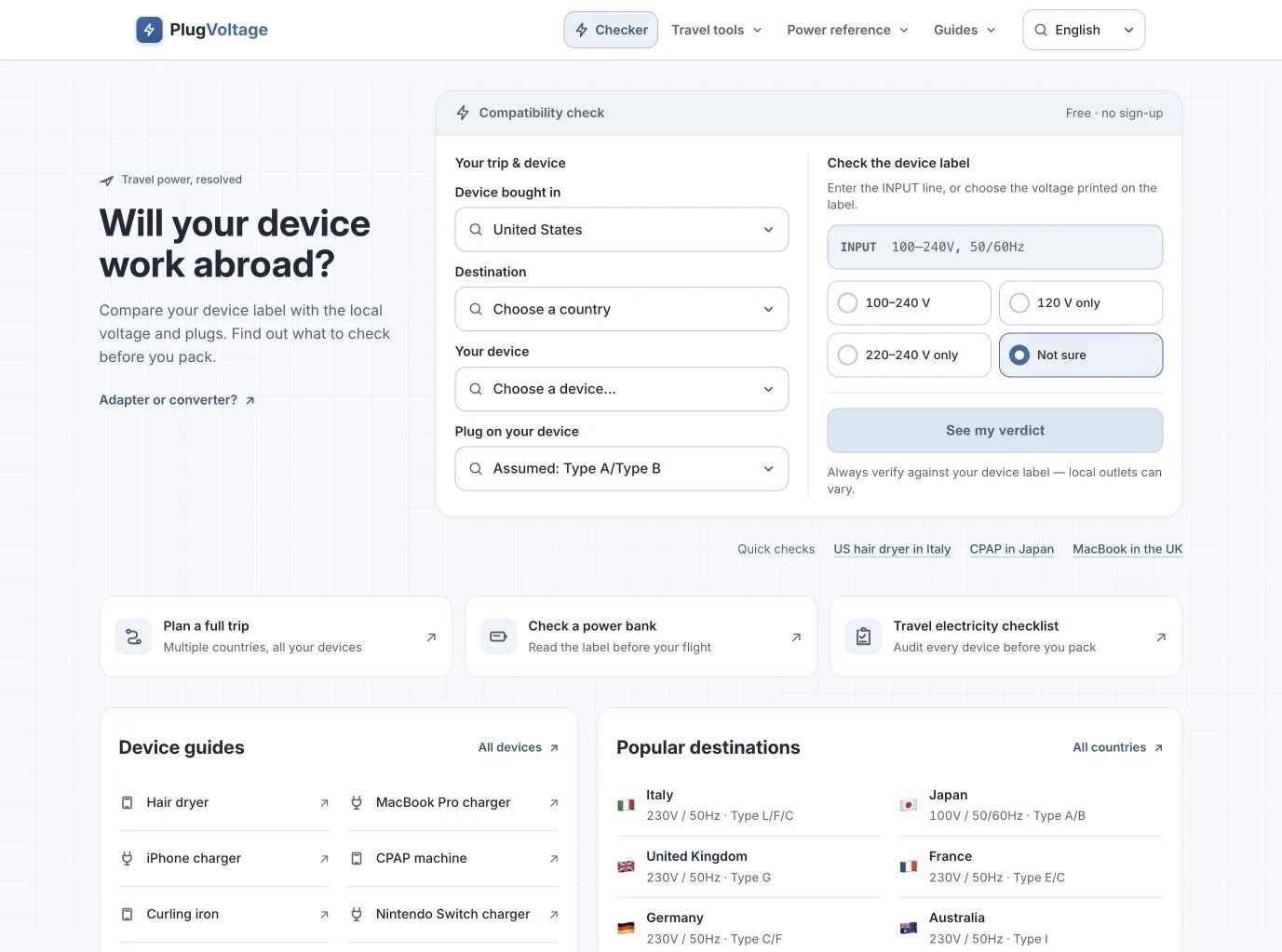
PlugVoltage interface. Screenshot of the actual website.
Start by listing the devices you both actually intend to use. A reference such as PlugVoltage can help with the destination checks, while the labels on your own chargers supply the details that matter for your equipment.
Agree on what the kit needs to do
One person may need a laptop charged for a short work session; the other may depend on a camera battery for a full day out. Write down these priorities. It becomes much easier to decide which supplies to carry when the conversation is about real needs rather than whether an accessory might possibly be useful.
Do not assume that matching connectors make two chargers interchangeable. Check the device maker’s requirements, the charger output and the cable specification. Sharing a suitable charger can reduce clutter, but an unverified substitute is a poor way to save a few grams.
Check every stop on the route
A holiday with several countries needs a route list, not just the name of the airport where you first land. Include the places where you will sleep and charge equipment, and ask accommodation providers about anything unusual. Country references describe typical arrangements; individual outlets still need attention.
The travel power trip planner offers a way to organise several destinations and devices. Use the resulting list as a planning aid and resolve unknown labels before departure. A tool cannot inspect a hotel socket or establish the condition of a charger in your suitcase.
Give each charger an identity
Photograph the rating labels and add a small removable tag identifying the device each supply serves. Keep the photographs in a shared travel folder that you can access offline. This is especially helpful when one partner packs the equipment and the other unpacks it after a late arrival.
Learn to distinguish AC INPUT from OUTPUT. A line such as “100–240V” on the input describes an accepted voltage range; it does not confirm every other compatibility requirement. The guide to reading a dual-voltage label explains the distinction. Check frequency, plug fit, grounding and the exact manufacturer instructions as well.
Pack one organised pouch
- Group each required charger with its compatible cable.
- Carry appropriate plug adapters for the confirmed route.
- Keep one essential charging set easy to reach during travel.
- Remove damaged cables and accessories with loose or broken parts.
- Leave a little space so items can be returned to the pouch without forcing connectors.
Choose a dry, suitable charging location at the accommodation. Avoid turning a crowded bedside area into a pile of adapters hidden under clothes. If an outlet or accessory appears damaged, ask the accommodation staff for a suitable alternative.
Keep the holiday plan flexible
Check the pouch together before leaving each room. A simple spoken checklist — phones, camera, chargers, adapters — is more useful than discovering a missing item on the next train. Make the last person to unplug a device responsible for returning the complete set to its place.
A well-planned charging kit does not need to dominate the trip. It should quietly support the photos, directions, reading and occasional work you both want to enjoy, leaving less time spent searching for accessories and more time for the holiday itself.

Salut. Numele meu este Daniliuc Marcel Catalin. Mă consider o persoană melancolică iar, de cele mai multe ori, starea mea de spirit este influențată de poveștile auzite, cărțile citite, filmele văzute etc.