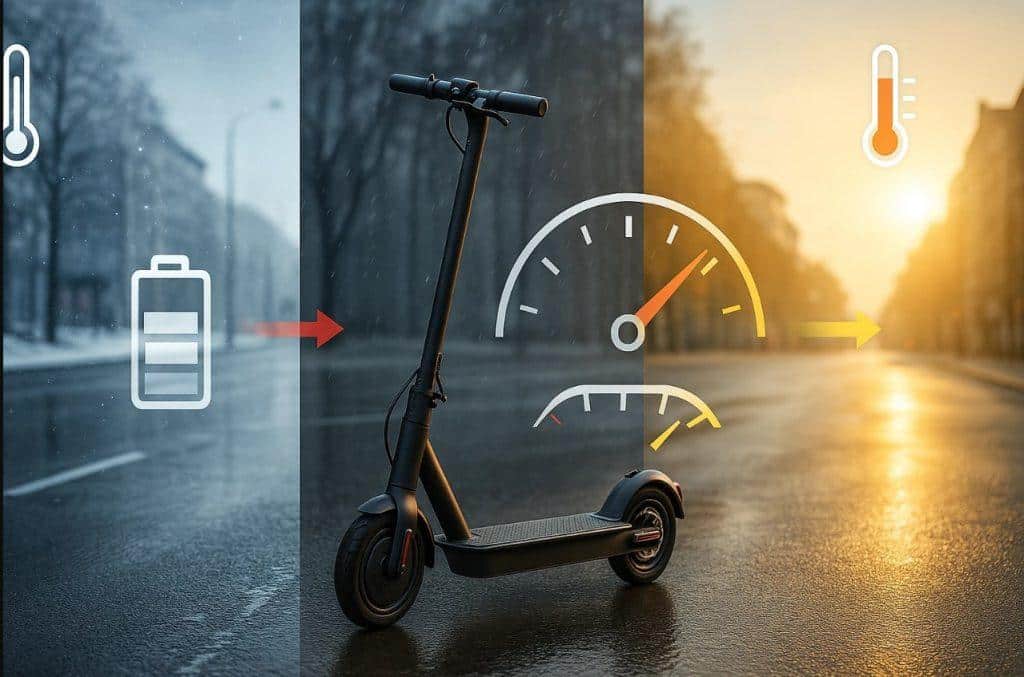
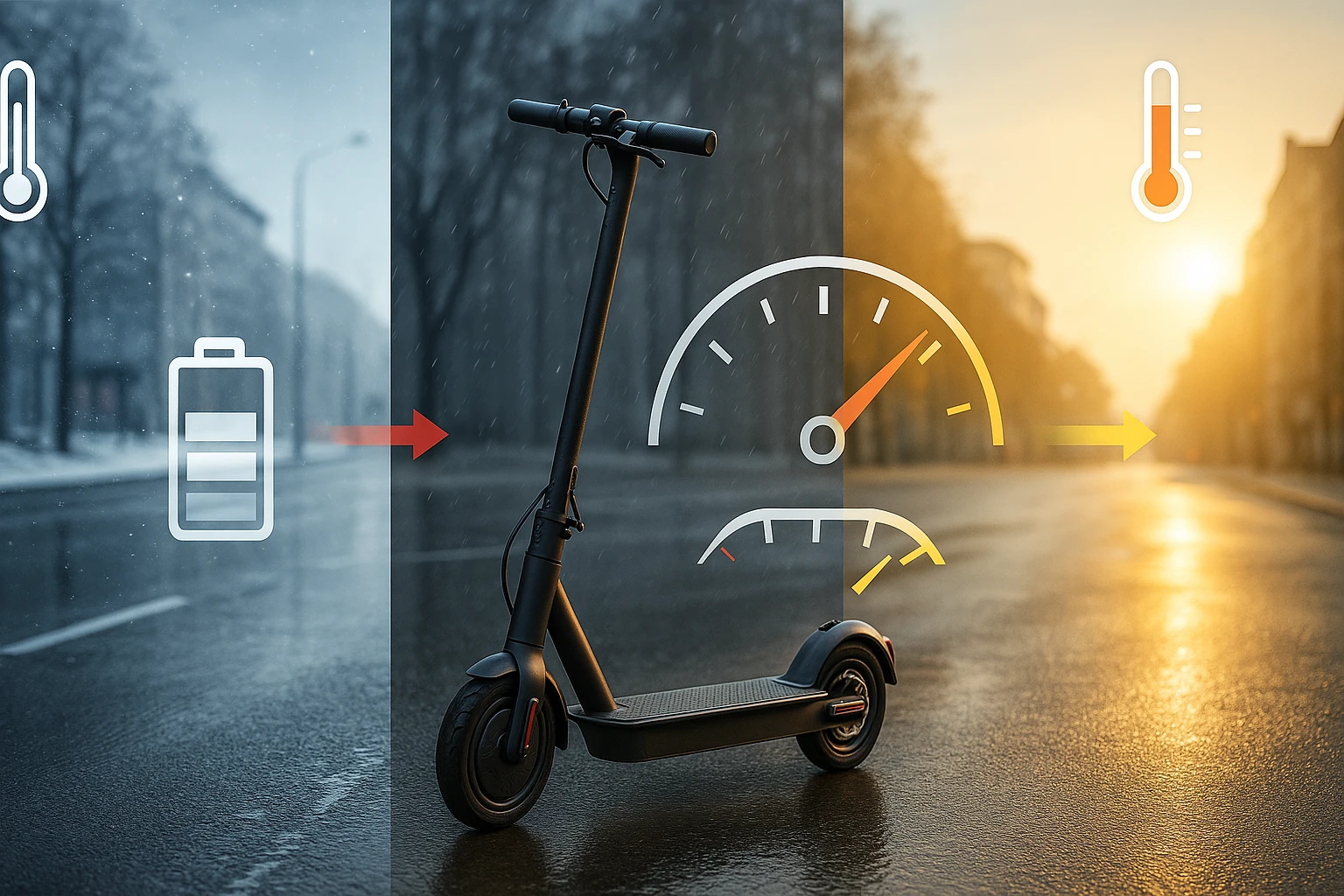
If you ride year-round, you already know that your scooter doesn’t go the same distance on a frosty January morning as it does on a mild April afternoon. Temperature, precipitation, wind, road surface, tire choice, and even your riding clothes nudge your efficiency up or down. This guide explains why range changes with the seasons and how to plan around it—so you can keep commuting, exploring, and running errands without range anxiety. For model-specific insights and buying research, you can always browse reviews on ScooterPick.com.
The Building Blocks of Range
Electric scooter range isn’t one number; it’s a moving target. Several forces push and pull on your battery and drivetrain:
Battery health and chemistry. Lithium-ion cells deliver fewer usable watt-hours when they’re cold, and they degrade faster if kept very hot or fully charged for long periods.
Internal resistance and voltage sag. As temperatures drop, internal resistance rises. Consequently, a hard throttle draw causes more voltage sag, which can trip low-voltage cutoffs earlier.
Aerodynamic drag. Drag scales rapidly with speed and depends on air density. Colder air is denser, which increases drag. A bulky winter jacket also adds frontal area.
Rolling resistance. Softer tires, lower pressures, wet roads, grit, and slush all increase energy loss at the contact patch.
Grade and wind. Hills raise energy demand sharply. Headwinds behave like “invisible hills,” while tailwinds help.
Rider behavior. Fast starts, high top speeds, and frequent stops drain more energy than a smooth, moderate pace.
Because these variables change with the weather, the same scooter can feel like three different machines across winter, spring rain, and summer heat. Now let’s break down each season.
Cold Weather: Why Range Drops and What to Do About It
When temperatures dip near freezing, two things bite range the hardest: cell chemistry and denser air. First, cold lithium-ion cells cannot move ions as freely. As a result, usable capacity shrinks and voltage plummets more easily under load. Second, cold air increases drag, so your usual cruise speed costs more energy. On top of that, tire pressure falls roughly 1–2 psi for every ~10°F drop, which further increases rolling resistance.
Practical effects you’ll notice:
The scooter “feels” less punchy.
The last 20–30% of your battery drains faster under throttle.
BMS protections may limit current more often in deep cold.
Regen acceptance can drop because cold cells won’t absorb charge spikes efficiently.
Cold-weather range habits that work:
Start with a warm battery. Store and charge your scooter indoors. Then head out soon after unplugging. A warm pack delivers better power and more capacity.
Lower your cruising speed slightly. Because drag rises in cold air, trimming 3–5 km/h (2–3 mph) can preserve a surprising amount of energy.
Check tire pressure weekly. Cold snaps deflate tires. Ride at the manufacturer’s recommended pressure to reduce rolling resistance and pinch flats.
Use Eco or a gentler throttle map. Smoother current draw reduces voltage sag and keeps you in a more efficient power band.
Avoid fast charging in the cold. If your charger or scooter supports high-current charging, reserve it for warm conditions. Cold cells prefer slower, gentler charges.
Protect the deck and ports. Moisture plus road salt can creep past gaskets. Keep the charge port sealed, wipe down the deck, and dry the scooter indoors.
Dress smart to reduce drag. Bulky outerwear is vital for warmth; however, a slimmer windproof shell over layers cuts flapping fabric and drag.
Realistic expectations: In near-freezing weather, many commuters see a 10–30% drop compared to mild conditions. If you routinely push the last kilometer of range, build in a buffer—either slow down, plan a charging stop, or shorten your route slightly until temperatures rise.
Riding in Rain: Water, Rolling Resistance, and Safety Trade-Offs
Rain complicates range in several subtle ways. Wet roads increase rolling resistance. Puddles and grit add drag and introduce more stop-start riding as you pick safer lines. Additionally, you might run the headlight and taillight in flashing or max-brightness modes during gloomy conditions, which adds small but non-zero energy draw.
What changes most in the wet:
Traction. You accelerate and brake more gently, which can reduce peak current draw but also keeps you at lower, less efficient speeds for longer.
Tire behavior. Treaded or softer compounds help grip yet increase rolling resistance.
Clothing. Rain shells, baggy pants, and backpack covers catch more air.
Range-friendly wet-weather moves:
Choose the right tires. If your scooter allows it, run a treaded, tubeless tire with puncture protection during the wet season. You gain grip and cut flats, even if rolling resistance rises slightly.
Keep pressures consistent. Don’t underinflate “for more grip” unless the manufacturer recommends it; too-low pressure wastes energy and risks rim strikes.
Ride smoother lines. Avoid standing water and paint stripes. You’ll keep momentum and save watt-hours by avoiding sudden braking and re-acceleration.
Maintain your drivetrain. Clean and dry your scooter after wet rides. Lightly lube bearings (if serviceable), and inspect brake pads for grit that increases drag.
Mind the IP rating. Most commuter scooters handle light rain, not pressure washing. Water ingress can cause parasitic losses, sensor errors, or corrosion over time.
What to expect: In steady rain, plan for 5–15% less range than on the same route in dry, mild weather. The exact number depends on tire type, how hard you push, and how often you stop for safety.
Heat: Mixed Blessings for Range and Battery Health
Hot weather behaves differently. Warm lithium-ion cells typically deliver current more easily, which can make your scooter feel snappier. Warmer air is also less dense, which slightly reduces drag. Because of that, some riders notice equal or even better per-ride range on a mild summer day—if they keep speeds moderate.
However, heat stresses components and invites habits that hurt range and longevity:
Higher cruising speeds. Dry roads and sunshine tempt you to ride faster, and speed costs range exponentially.
Thermal management. On very hot days, the controller or cells may heat-soak, triggering power limits.
Tire pressure spikes. Pressure rises with temperature, shrinking the contact patch and sometimes increasing slip or harshness over rough asphalt.
Battery aging. Storing your scooter at 100% charge in a hot garage degrades cells faster, shrinking long-term capacity.
Heat-smart tips:
Cap top speed on long hauls. Hold a steady cruise a few km/h below your scooter’s max. You’ll gain range without feeling slow.
Park in the shade. Avoid baking the battery in direct sun. High pack temperatures accelerate aging.
Charge after, not immediately. Let a heat-soaked scooter cool to room temperature before charging for best long-term health.
Set a charge target. If you don’t need full range tomorrow, stop around 80–90% to reduce thermal and voltage stress in hot conditions.
Monitor tire pressure. Check in the morning. Expect a few psi increase by afternoon; adjust to the sweet spot your tires and rims prefer.
Bottom line: Moderate summer temps can help per-ride efficiency, but extreme heat erodes battery life. Ride a touch slower, treat the pack gently, and you’ll keep both range and longevity in balance.
Wind, Elevation, and Seasonal Side Effects
Weather rarely arrives alone. Winter brings headwinds. Spring brings gusty squalls. Summer adds convection breezes and sometimes dust. All of it changes the math.
Headwinds behave like climbing a hill. Even a modest 15 km/h (9 mph) headwind can lop meaningful distance off a small commuter pack.
Tailwinds are “free range.” Tuck in, ride steady, and resist the urge to spend the wind dividend on speed.
Elevation matters year-round. Cold descents can chill the pack further and limit regen. Hot climbs can raise controller temps and trigger limits.
Because these effects vary ride to ride, it helps to plan dynamically.
Seasonal Tire and Pressure Strategy
Tires are your only contact with the road. Consequently, small choices have big range consequences.
Winter: Prioritize grip and puncture resistance. Use treaded tires with a durable compound. Keep pressure at the high end of spec to reduce rolling resistance while retaining safe traction.
Wet seasons: Tubeless with sealant helps avoid flats from debris. Inspect tread for embedded grit that increases drag.
Summer: If your roads are clean and dry, a smoother tread or rolling-efficient compound can return a few extra kilometers. Don’t overinflate; harsh rides cause micro-slip that wastes energy.
Pro tip: Recheck pressure after major temperature swings. Pressure can drift more than you think across seasons.
A Seasonal Maintenance Calendar for Better Range
Because range depends on friction and electrical efficiency, preventative care pays off:
Late Fall / Pre-Winter
Inspect and inflate tires; replace worn tread before slippery months.
Re-grease serviceable bearings and pivot points.
Add dielectric grease to charge-port caps and light connectors if recommended.
Clean and wax the deck to repel slush and salt.
Mid-Winter
Rinse off salt with a damp cloth after rides; dry indoors.
Top up pressure weekly.
Keep the pack warm before leaving home.
Early Spring
Deep clean to remove winter grit.
Check brake alignment and pad wear. Draggy pads steal range.
Inspect fenders and cables for water damage.
Midsummer
Move the charger and scooter away from hot windows.
Audit your charging routine; stop at 80–90% when full range isn’t needed.
Verify that controller vents (if any) are unobstructed.
Smart Charging and Storage by Temperature
Charging habits can either amplify or cushion seasonal range swings:
Cold: Charge indoors. If the scooter sat in a cold garage, bring it inside and let it warm before charging. Use standard-rate charging rather than high current.
Mild: This is the easiest band. You can charge to 100% for maximum range. Even so, stopping at 90% when you don’t need full distance helps long-term health.
Hot: Avoid leaving the pack full and hot. Time your charge to finish close to departure. If you store the scooter for days, park it around 40–60% in a cool room.
These habits won’t add kilometers overnight, yet they slow battery aging. Over a season, that preserves real-world range.
Planning a Trip with the Range Estimator Tool
Before a ride that pushes your limits—say a cross-town errand loop—spend two minutes modeling the route:
Open the Range Estimator Tool.
Enter rider weight and gear. Jackets, backpacks, and cargo matter. Add a few pounds for seasonal clothing.
Set ambient temperature. Use the day’s forecast. Colder entries will reflect realistic efficiency losses.
Choose average speed. Be honest. In winter or in the rain, drop it slightly.
Add hills. Enter approximate elevation gain for your loop.
Compare modes. Try Eco vs Normal to see how a gentler throttle map changes the outcome.
Add a buffer. If the tool says you’ll finish at 10%, plan to end closer to 20–30% in winter or on windy days.
Because conditions shift, this quick run-through protects you from the “unexpected shortfall” that strands riders a few blocks from home.
Case Study: Seasonal Behavior on a Real-World Commuter
To see how a practical commuter holds up across seasons, check the JUICEASE E1 Pro Electric Scooter Review. Reviews like this highlight how motor tuning, battery capacity, tire choice, and brakes combine to deliver consistent range. Moreover, they often explain how a model’s controller manages current in cold weather or heat—useful clues for planning your winter and summer settings.
Riding Style: The Easiest Seasonal Lever to Pull
Riding smoothly is always the cheapest “range upgrade.” Seasonal tweaks make it even more effective:
In the cold: Accelerate gently in the first minutes while the pack equilibrates. Keep speeds steady once you’re rolling.
In rain: Look farther ahead, avoid sudden braking, and carry momentum through clear lines.
In heat: Resist max throttle on long, exposed stretches. Small speed reductions add back significant range.
Additionally, learn your scooter’s most efficient cruising speed. Many commuters find their sweet spot a bit below the legal cap. Once you hit it, hold it, and let the scooter do the work.
Common Questions, Fast Answers
Does preheating the scooter help in winter?
Yes. Storing and charging indoors warms the battery. Leaving just after charging keeps cells in their ideal range, which improves power delivery and usable capacity.
Should I lower tire pressure for rain or snow?
Generally, no—unless your manufacturer recommends a rain/snow setting. Too-low pressure wastes energy and increases pinch-flat risk. Traction comes more from tread, compound, and smooth inputs.
Can I ride in heavy rain?
Check your scooter’s IP rating and the manual. Light rain is fine for many commuters, but deep puddles and pressure jets are not. Water ingress harms electronics and bearings.
Why does my range vary so much week to week?
Small differences—colder air, headwinds, a backpack, underinflated tires, or more stops—compound. Model your ride with today’s conditions to set a realistic target.
Do lights make a big difference?
Not usually. Modern LEDs sip power. The bigger hits to range are speed, temperature, wind, elevation, and tires.
A Simple Seasonal Checklist
Weekly: Check tire pressure; wipe down after wet or salty rides.
Monthly: Inspect brake alignment and pads; confirm fender integrity.
Before cold snaps: Charge indoors; plan routes with a small speed reduction.
Before heat waves: Park and charge in the coolest room you have; limit full charges.
Rainy stretches: Choose safer lines, keep connectors protected, and dry the scooter after rides.
Conclusion: Control the Variables You Can
You cannot change the weather. However, you can control speed, tire pressure, charging habits, route choices, and gear. Cold air and rain will still trim range; hot days will still tempt fast riding. Even so, a few seasonal adjustments keep your commute reliable and your battery healthy.

Salut. Numele meu este Daniliuc Marcel Catalin. Mă consider o persoană melancolică iar, de cele mai multe ori, starea mea de spirit este influențată de poveștile auzite, cărțile citite, filmele văzute etc.